Readers Explain
The Fall Of The
Dollar In Costa
Rica
The US dollar's
dive this week
almost reached
the floor of the
exchange bands
set by the Banco
Central de Costa
Rica (BCCR) -
Costa Rica's
Central Bank.
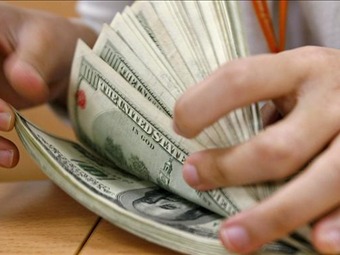
The dollar
closed on Friday
at ¢508 colones
for the buy and
¢518.24 for the
sell.
The floor is
¢500 colones to
one US dollar.
So, why is this
happening? Your
guess is as good
as our or the
experts.
Here is what
some of our
readers had to
say:

The USD was at
76.6 on the
global exchange
when the
exchange in CR
was 580 colones.
Now the USD has
strengthened to
80.7 in the
world market and
the exchange in
CR had dropped
to almost 500. A
guess would be
that the banks
in CR are taking
the USD
purchased at a
reduced rate and
selling them for
profit on the
global market,
if I understand
the market.
[email protected]
It’s time to
get used to
currency
fluctuations in
both directions.
I don’t recall
my US friends
complaining
during the past
few years when
the Colón was
constantly
depreciating
against the US
dollar.
The reasons for
the current
change in the
currency
exchange rates
are obvious.
Costa Rica
spends less on
purchasing
foreign goods
and services and
our account
balance
experiences less
pressure.
Subsequently
there is less
demand to
purchase US
dollars.
Increasingly,
our foreign
trade is done
outside of North
America. The
various free
trade agreements
with China and
Singapore as
well as the
impending one
with the
European Union
are living proof
thereof.
Furthermore, the
US experiences
one of the worst
declines in its
financial
markets in
recent history.
Real estate
values have
plummeted and
our neighbors in
North America
will have to
learn to live on
less.
For us here who
do not rely on
the US dollar as
a prime currency
of income this
is a welcome
development. For
me as a European
who has
travelled
extensively
throughout the
world, this is
nothing new. I
can understand
the concern of
my US friends
here, though,
whose dollars
will buy them
less. Still,
we’re
essentially just
going back to
where we started
out about a year
ago, so really,
I think this is
more like a
tempest in a
teacup than
anything to get
upset over
seriously.
Marcel M.
Pfister, Daniel
Flores, Pérez
Zeledón
I have no inside
information, of
course, but I
read the
newspapers and
things like
Goldman Sachs
and what the US
government does
and I can't help
but wonder how
nice it might be
if I had a large
pile of
depreciating
colons and could
buy cheap
dollars with
them at an
extremely low
rate and then
suddenly the
dollar managed
to magically
float back up
again.
Wouldn't that be
nice?
Gregg Calkins at
[email protected]
Jose Pablo calls
this the "Golondrina
Effect" A
golondrina is
Spanish for the
swallow and the
money flies from
one country to
another looking
for a temporary,
safe place to
land with higher
than normal
interest rates.
John ,
[email protected]
Keep your
letters coming.
Send to:
[email protected]
|
|
|
 |
|
|
|
|
|


