Subscribe via E-Mail

Get all of our news delivered fresh to your inbox every morning! Just tell us your name and where to send it using the form below.

PS – We hate spam too. We don’t sell or share our list with anyone, and we never send commercial email.


luxe
Friday, January 29th, 2016  |  USD: Buy 531.29 / Sell 543.92
20 years

Record number of Americans giving up citizenship
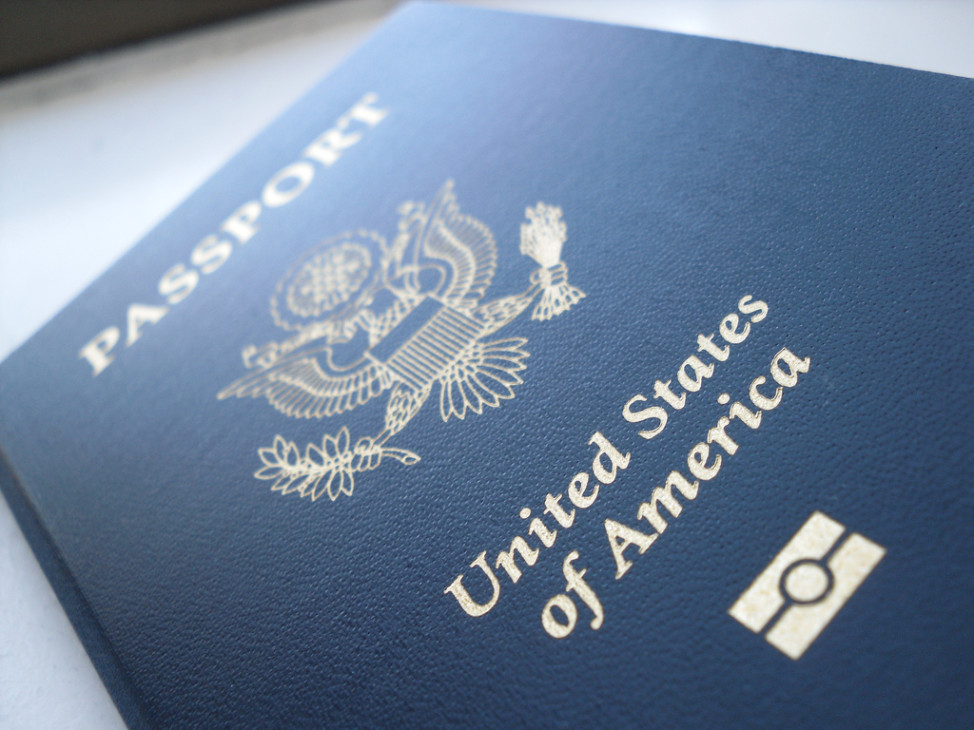
(Lena LeRay / Flickr / CC)

(Lena LeRay / Flickr / CC)

By Dora Mekouar

May 14th, 2015 (VOA) It’s a highly coveted passport that represents freedom and opportunity to millions of people worldwide, yet more Americans than ever are renouncing their U.S. citizenship.

A record number of Americans — 1,337 — relinquished their passports in the first three months of 2015, according to the U.S. government. That’s up 18 percent from last year at this time, according to an analysis by Bloomberg News, and nearly 40 percent of the total 3,415 Americans who gave up their passports in 2014.

“It was a gut wrenching experience that I do not think I will ever be over,” former American Ruth Freeborn told reason.com. Freeborn says she is an average, stay-at-home mother who married a Canadian man and moved to Canada to help care for his elderly parents. She blames the Foreign Account Tax Compliance Act (FATCA) for forcing her into a decision she didn’t want to make.

FATCA, which was enacted by Congress in 2010, was designed to target rich Americans who use foreign accounts to avoid paying U.S. taxes, but it impacts ex-patriots at all income levels. FATCA requires that foreign financial institutions  report financial accounts held by U.S. taxpayers to the Internal Revenue Service (IRS), the U.S. government agency responsible for tax collection.

The United States taxes its citizens on all income, regardless of where is is earned or where a person lives. This can lead to complicated and time-consuming paperwork that some ex-patriots complain has been made even more burdensome by FATCA.

“The cost of compliance with the complex tax treatment of non-resident U.S. citizens and the potential penalties I face for incorrect filings and for holding non-U.S. securities forces me to consider whether it would be more advantageous to give up my U.S. citizenship,” Stephanos Orestis, a American living in Norway, wrote in a March 23 letter to the Senate Finance Committee. “The thought of doing so is highly distressing for me since I am a born and bred American with a love for my country.”

More than 7 million Americans live abroad, according to the IRS. Many of those who have chosen to renounce their citizenship have limited ties to the United States. Some were born here but have lived elsewhere their entire lives. Anyone born in the U.S. automatically receives citizenship, as do people born abroad to American parents.

Eduardo Saverin, the Brazilian-born billionaire co-founder of Facebook, trimmed his tax bill when he relinquished his U.S. citizenship in 2012.

“I am obligated to, and will pay hundreds of millions of dollars in taxes to the U.S. government,” said Saverin in a statement at the time. “I have paid and will continue to pay any taxes due on everything I earned while a U.S. citizen.”

As Saverin learned, giving up U.S. citizenship doesn’t come cheap. There’s the $2,350 renunciation fee and an exit tax that can climb into the millions of dollars.

But some who have renounced have found there’s an emotional cost to giving up U.S. citizenship, which often goes to the core of Americans’ identity.

American-born Patricia Moon, who lives in Canada, renounced her citizenship not long after FATCA was enacted.

“I was terrified we’d lose all our money,” Moon, who became a Canadian citizen in 2008, told the Guardian.

But the decision to give up her American passport wasn’t an easy one. “It was like cutting off my right arm.”


costa rica news

ATTENTION: If you are seeing this message,


Advertisement


Get our news delivered fresh to your inbox every morning.

Click here to subscribe to our email list. We hate spam too and never send commercial email.

Like us on Facebook and receive our news in your timeline

  • Ben

    The rich hate paying taxes in the US. Being a US citizens is not such a great thing anymore. I know of three people that gave up there US citizenship and seem very happy. Most large US companies say they are not US owned or managed by US citizens. I guess the only people that want to live under a two party system of goverment are the poor and corupt elected official in the USA.

    • mhogan

      Jeez, I never heard anyone say they “love to pay taxes”. Maybe, Ben, you do. How noble. Even if tax rates were not progressive, the “rich”, as you so distastefully call them, pay the most money in taxes on an individual basis. Because they manage to take advantage of legal loop-holes does not negate the previous fact.

  • Linda

    I totally agree with Bill, being a US citizen is not such a great thing anymore. This country is becoming more and more like a communistic country. Our rights keep being taken away slowly, one by one. How long before we’re not going to be able to openly admit we’re Christians, how long before we make genocide for the elderly or handicapped a rule? How many more things will be taken from us or we’re forced to comply with?
    When will we stop immoral acts from becoming acceptable.
    How much longer do we pay for social security benefits before we’re told there are no benefits to be paid out? How long do we sit back and let the government officials break the rules of the constitution? Those officials who aren’t supposed to be able to have a say in the pay and benefits they get and yet continue to give themselves more benefits that what other Americans receive? Why should they care if soc. ser. goes bankrupt they’ve got their fat retirement benefits all set and secure.
    We’ve lost a lot of respect of other countries, we’re no longer the great leader around the world. In the U.S. democracy is another name for complacent fools.

  • duke ster

    Still the best country in the WORLD! Sure a lot wrong with things and so on but all in all the best system, rule of law is powerful, generally you will get police response when robbed etc. People will stay in line and obey laws because they know cops will respond, judges will act and health care is readily available. Try being poor in Costa Rica and tell us how you get along –anyone? You will simply die in CR and many many countries in the world if you are poor and have no money for food. There is no social net to catch you when you fall, unlike USA where you will be helped. Being poor in USA-?-tell us how much better off you will be…anyone? Yes rights are being taken away etc. All countries are controlled by Satan according to the Bible. Hence all systems are corrupt. And as for USA being a communist country? Have you read the reporting here on ICR lately how CR citizens are being stopped at roadblocks and searched and money confiscated, and have you never heard of US citizens being stopped in the streets and asked for identification? Have you been robbed or heard of someone being robbed in CR and then realized you are s#@t out of luck as far as getting any satisfaction or any follow up by police?

Popular Content